🤖 Multi-Agent Workflows Just Got Easier: Gemini CLI Subagents Are Here
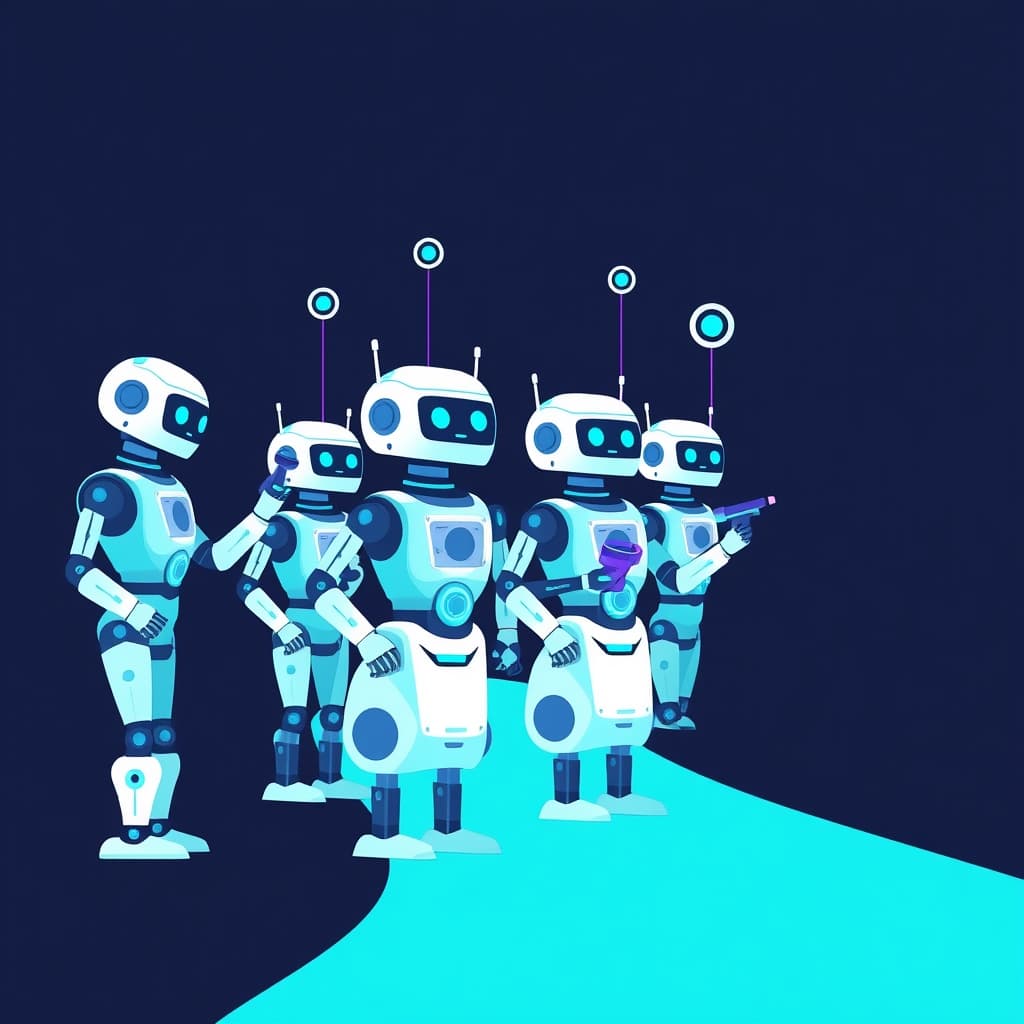
Google just dropped something that changes the game for anyone building with AI agents — subagents in Gemini CLI. And honestly, after spending the last year wrestling with monolithic agent scripts, I can say this is the kind of tooling we've been needing.
What Are Subagents?
The idea is simple but powerful: instead of cramming everything into one massive agent context, you delegate specialized tasks to subagents that run in their own isolated contexts. Think of it like microservices for AI agents — each subagent is an expert at one thing, and your main orchestrator stays lean and fast.
Here's the architecture in a nutshell:
- Main orchestrator: Your primary session, handles coordination and high-level logic
- Subagents: Spawned for specific tasks — code review, file operations, research, you name it
- Context isolation: Each subagent gets a fresh context window, preventing the dreaded "context rot" that plagues long-running sessions
- Parallel execution: Run multiple subagents simultaneously for serious productivity gains
Why Context Isolation Matters
I've built several AI-powered automation pipelines over the past year, and the single biggest failure mode is context pollution. Your agent starts a conversation, handles 50 turns, and by turn 60 it's hallucinating because the relevant context is buried under three hours of irrelevant chat history.
Subagents solve this elegantly. Each specialized task gets a clean slate. The subagent does its work, returns a concise summary, and the main orchestrator absorbs only what's relevant. No more 100K-token context windows full of noise.
Customization via Markdown
One of the neatest features is that subagents can be customized using Markdown files. You define the agent's persona, constraints, and tools in a simple document — no complex YAML configs or DSLs to learn.
# Code Reviewer Agent
You are a senior code reviewer.
Focus on: security vulnerabilities, performance bottlenecks, and type errors.
Always suggest specific fixes.
Return results as a numbered list with file paths.
Then invoke it with something like:
@code-reviewer "Review the changes in src/api/"
This is exactly the right level of abstraction. It's declarative enough to be predictable, but flexible enough to handle diverse tasks.
Practical Use Cases
Here's where I see subagents making an immediate impact:
1. CI/CD Pipelines Replace brittle bash scripts with agent workflows. A PR lands → a review subagent inspects the diff → a test subagent runs the suite → a deploy subagent handles the rollout. Each stage is isolated, parallelizable, and debuggable.
2. Research & Documentation Spawn a subagent to crawl docs, another to read the codebase, and a third to synthesize findings. The main orchestrator just assembles the final output.
3. Multi-Service Debugging When a bug spans your frontend, backend, and database, you can deploy subagents to investigate each layer simultaneously. The orchestrator correlates their findings into a root cause analysis.
The Bottom Line
Subagents in Gemini CLI aren't just a feature — they're a paradigm shift for how we structure AI-assisted development workflows. The move from monolithic prompts to orchestrated multi-agent systems mirrors the same evolution we saw in software architecture: from monoliths to microservices.
If you're building agentic systems today, this is the tooling pattern you should be paying attention to. I'll be migrating several of my automation scripts to this architecture over the next few weeks — the productivity ceiling with single-agent systems is real, and subagents are the way past it. I've been experimenting with multi-agent workflows for automating portfolio tasks — from content generation to deployment. The blog posts you see here were partly created using these same agent patterns.
If you want to understand the framework powering this site, read about React Server Components vs Qwik. For a practical AI agent use case, see How We Cut Incident Response Time by 90%.
Further Reading
Related Articles
🤖 Production-Ready AI Agents: 5 Hard Lessons from Refactoring a Monolith
The Monolith Trap I've been building AIpowered features for the past couple of years, and if there'
🔌 No Dumb Questions: What Is an MCP Server and Why Should You Care?
MCP Server explained simply: what it is, why it matters for AI agents, and how to get started. No du
🔥 Mojo 1.0 Beta Is Here — Python for AI Just Got a Serious Upgrade
Mojo — the language that promised to merge Python's developer experience with Clevel performance — j