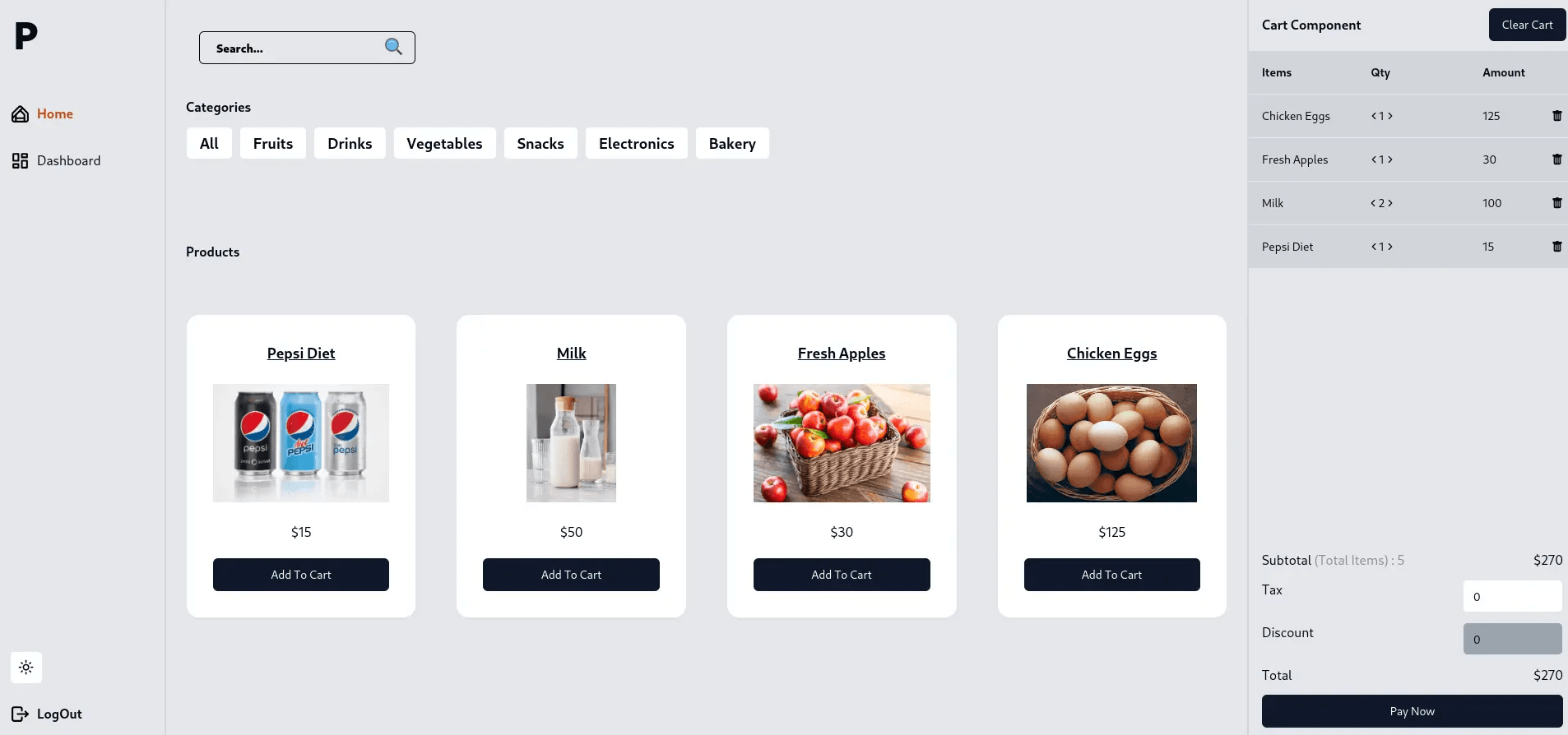
POS System
A modern, full-stack Point of Sale system built with React, NestJS, and Prisma. Features include real-time inventory management, role-based access control, and a responsive UI designed for speed and reliability.
POS System Case Study
Role: Full Stack Developer
Tech Stack: React 18, Vite, NestJS, Prisma, PostgreSQL, Docker, Tailwind CSS
Live Demo: View Demo (Replace with actual link)
🚀 The Context & Evolution
This project holds a special place in my journey. It started as one of my first major full-stack applications, built to master the fundamentals of web development. Initially, it was a proof of concept to understand how complex data flows between a React frontend and a Node.js backend.
However, software (and developers) must evolve. Recently, I decided to modernize and revitalize this codebase rather than letting it gather dust. This wasn't just a maintenance update; it was a complete overhaul:
- Performance: Migrated from Create React App to Vite for instant server starts and optimized builds.
- Database: Upgraded to the latest Prisma version to leverage improved type safety and performance.
- UI/UX: Completely redesigned the interface using HEROUI and modern design principles, moving away from a "bootstrappy" look to a polished, professional aesthetic.
- Strictness: Enforced stricter TypeScript configurations to eliminate legacy "any" types and improve reliability.
🎯 The Challenge
Retail businesses need speed, accuracy, and reliability. Use cases like a cashier processing a line of customers or a manager checking stock levels cannot tolerate lag or data inconsistencies.
My goal was to build a system that solves these core problems while serving as a playground for advanced architectural patterns. The technical challenge was dual-faceted:
- Business Logic: Handling complex relationships between Products, Categories, Units, and Orders while maintaining data integrity.
- Modernization: Refactoring a legacy code structure into a clean, modular Monorepo without breaking existing functionality.
🏗 Technical Architecture
I adopted a Monorepo structure to keep the client and server closely aligned.
Backend (The Backbone)
- NestJS: Chosen for its scalable, modular architecture. It forces good habits like dependency injection and separation of concerns.
- Prisma ORM: A game-changer for working with PostgreSQL. Its type-safe generated client means database queries are validated at compile time, drastically reducing runtime errors.
- Authentication: A robust JWT implementation with Refresh Tokens. This ensures users stay logged in securely without constantly re-entering credentials, a critical feature for POS terminals.
Frontend (The Experience)
- React 18 & Vite: Leveraging concurrent features and lightning-fast HMR.
- Redux Toolkit: Used for complex global state, specifically managing the POS Cart. When a cashier adds items, applies discounts, or holds an order, Redux ensures this state is predictable and persistent.
- Design System: Built with Tailwind CSS and Radix UI primitives (via Shadcn), ensuring accessibility and responsiveness.
💡 Solving Real Problems
1. The "Drift" Problem (Inventory Management)
- Problem: In a busy store, two cashiers might sell the last item simultaneously, leading to negative stock.
- Solution: Capable of handling high concurrency. I utilized proper database transactions via Prisma. When an order is placed, the stock deduction and order creation happen within a single atomic transaction. If one fails, both roll back.
2. Secure Access Control
- Problem: A cashier should not be able to delete products or view sensitive admin analytics.
- Solution: I implemented a robust Role-Based Access Control (RBAC) system. Using NestJS Guards (
@Roles('ADMIN')), I secured endpoints so that only authorized personnel can perform sensitive actions, while Cashiers have a streamlined, restricted interface for sales only.
✨ Key Features
- Modern POS Interface: A keyboard-friendly, fast interface for processing sales efficiently.
- Interactive Dashboard: Real-time visualization of sales trends using Recharts, helping owners make data-driven decisions.
- Multi-Unit Support: Flexible product management that handles different units (pcs, kg, etc.) and categories.
- Dockerized Deployment: The entire stack (Frontend, Backend, Database) spins up with a single
docker-compose upcommand, eliminating "it works on my machine" issues.
🧠 What I Learned
Revisiting this project taught me that code is a living thing. The difference between my initial implementation and the current version is night and day.
- Refactoring is a skill: Learning how to migrate a live database and swap out build tools without downtime is as valuable as writing new code.
- Type Safety is king: Moving to strict TypeScript saved me from countless bugs that would have only appeared in production.
- User Experience Matters: A powerful backend is useless if the frontend is clunky. Investing time in a proper design system paid off in usability.